

ON THE GROUND FOR ENGLAND’S 1381 PEASANT UPRISING

I was commissioned by top lad 10Foot to “write something about English land rights” for the Big Issue. I only had 500 words so I wrote this fictional report, written from the point of view of a contemporary journalist covering England’s 1381 peasant uprising.
JUNE 12th 1381
ENGLAND—For the past few weeks, tax collectors in the south have been getting their head’s caved in. They arrive hostile, but they leave running. Usually in a shower of fractured flag stones. That’s what the peasants think to thenew poll tax: an extra shilling per head, regardless of wealth or debt. With wages frozen to pre-plague earnings and the country broke from our war with France, this has been the final straw. The people have had enough. For weeks now they’ve refused to pay, and so the tax collectors were sent out in force.
The peasant’s rage at Robert Hales, the Lord Treasurer responsible for collecting the new taxes, has been violentlytaken out on these collaborators who do his bidding. Limbs broken, throats cut, and houses burned, but still, not another penny given up to the monarchs nor the parliamentarians. The people are winning. A whole rebellion has risen. Armed peasants have moved across the land from Essex and Kent, forging their path and taking over Canterbury just a few days ago. This was of course a significant victory for the rebels, as their nemesis—Lord Chancellor and Canterbury Archbishop Simon Sudbury—is the key figure pushing the poll tax.
Now, here in London, the rebels have come to take downKing Richard II himself. They’ve stormed the city, led by a man named Wat Tyler. Tyler is a Kentish roofer turned rebel leader. He’s a hero to these crowds. His men came from the south, with their associates of an Essex militia arriving from the north. Those in power are currently surrounded.Londoners themselves opened the gates for the peasant battalions. In just a few hours, the world has turned upside down. The Savoy Palace is currently burning. Ash slowly drifts from the sky. The war isn’t won, but right now the people are free.
Thousands of rebels move through the streets, armed with improvised scythes, longbows, and short swords looted from conquered grounds. Bold chants of battle and the sounds ofclattering weapons can be heard from every street corner. These men are ready. I stop and ask one young rebel what their plan is. He’s wearing a looted iron helmet and carrying a sword almost bigger than he is.
“We’ve taken back our dignity,” he says. “Now we’re gonnatake the heads of the men who started all this!”
He charges back into the crowd, ready for war. Could this be the start of a new England, a country free from the boot of serfdom on our necks?
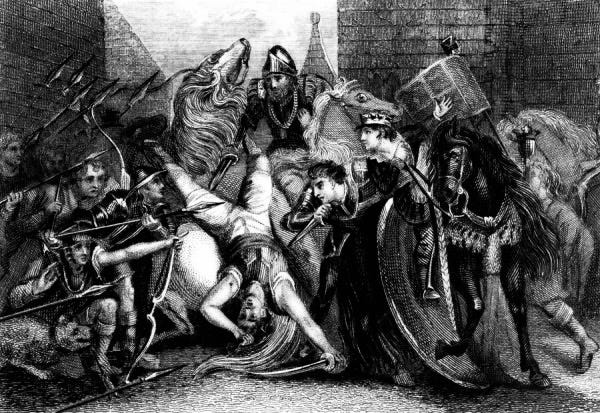
Over the following days the rebels beheaded Simon Sudburyand Robert Hales. They then met with the Lord Mayor, the King, and their staff. Wat Tyler faced them down himself to negotiate the demands of the peasant rebellion. A fight broke out. Someone from the royal entourage sneakily stabbed Wat Tyler. He soon died from his wounds, and they cut off his head. King Richard II declared himself the leader of the peasants. The 1381 peasant uprising failed. The hierarchy it fought against has outlived every dynasty since.
Reminded me of Watkin's "La Commune (1871), very funny, very interesting.